30 Read Across America Ideas for Schools

Profile picture of Trey MosierPosted by Trey Mosier
adult reading to children

Celebrate Every Reader

"Readers are hungry to have their stories in the world, to see mirrors of themselves if the stories are about people like them, and to have windows if the stories are about people who have been historically absent in literature"

Jacqueline Woodson

Every year on March 2 — Read Across America Day — schools, libraries, and communities across the country pause to celebrate one of the most powerful gifts we can give children: a love of reading. Organized by the National Education Association (NEA), Read Across America has grown into the nation's largest reading celebration, with an estimated 45 million participants annually. Today's program focuses on connecting students with diverse books and authors that reflect and expand their worlds.
Whether you're planning a single classroom event or a school-wide literacy week, here's everything you need to make it memorable — and manageable.

Plan Your Timeline

Getting organized early is the key to a smooth event. Here's a simple planning window to work from:

  • 4–6 weeks before: Lock in your guest readers, set your theme days, and send out volunteer sign ups. The earlier you recruit community readers, the better the response.
  • 2–3 weeks before: Confirm all participants, collect supply donations, and promote the event to families and local media.
  • 1 week before: Send reminders to volunteers and finalize your schedule by classroom or grade level.

🧠 Genius Tip: Use an online sign up to coordinate guest reader time slots and avoid double-booking. Volunteers can choose their own times without a single back-and-forth email.

Bring in Guest Readers

  1. Recruit community volunteers. Police officers, firefighters, business leaders, coaches, local authors, and community members of all kinds make memorable guest readers. Students love seeing familiar faces from the community holding a book.
  2. Invite a diverse roster of voices. Look for readers who reflect the backgrounds and experiences of your student community — and ones who can introduce students to new perspectives, too.
  3. Host a virtual author visit. Many authors, especially those featured in the NEA's annual Read Across America calendar, offer virtual school visits. This is a great way to connect students with authors from across the country.
  4. Pair older and younger students. Organize buddy reading between upper-grade students and younger classrooms. It builds confidence for both — older students take their role seriously, and younger ones love the attention.
  5. Create a "Mystery Reader" series. Don't reveal who is coming until they walk in the door. Parents, local celebrities, or school staff work great for this. The anticipation is half the fun.

Design Engaging School-Wide Events

  1. Plan a week of themed dress-up days. Reading-themed dress days build excitement all week long. Ideas include Favorite Book Character Day, Pajama and Read Day, Wear Your Favorite Color Day, or Bookworm Day (get creative with antennae!).
  2. Host a character parade. Invite students and teachers to dress as characters from their favorite books and parade through the school. Bonus points for a diverse mix of characters from different genres and cultures.
  3. Organize a Read-a-Thon. Challenge students to read as many minutes or books as possible over the week. Partner with local businesses to sponsor prizes for top readers, and consider donating a portion of any funds raised to a local literacy nonprofit.
  4. Hold a school-wide read-aloud moment. Pick a designated time on March 2 when every classroom stops and reads aloud together — even if it's just for 15 minutes. There's something powerful about an entire school doing the same thing at once.
  5. Set up a "Blind Date with a Book" display. Wrap books in paper with only a few clue words written on the outside. Students pick one without knowing the title. It's a great way to get kids to try genres they might not normally choose.

🧠 Genius Tip: Coordinating volunteers for multiple events across a week? Use tabbed sign ups to host multiple sign ups on a single page to keep everything organized.

Celebrate Diverse Books and Authors

One of the most powerful things Read Across America can do is put books in students' hands that reflect who they are — and open windows to lives different from their own.

  1. Build a diverse author spotlight wall. Feature authors from the NEA's current Read Across America recommended list alongside student-written reviews. This turns a bulletin board into a living conversation about books.
  2. Do a "Mirrors and Windows" lesson. Introduce students to the idea, made famous by educator Dr. Rudine Sims Bishop, that books can be mirrors (reflecting our own experiences) and windows (showing us others'). Have students categorize their favorite books and discuss why both matter.
  3. Explore books in multiple languages. Highlight bilingual books and authors who write across languages and cultures. This is especially meaningful in classrooms with English language learners and multilingual families.
  4. Feature student book recommendations. Create a "Student Picks" board where kids nominate and write a few sentences about a book they loved. This peer-to-peer recommendation often works better than anything an adult can suggest.
  5. Run a Diverse Books Challenge. Inspired by the NEA's own challenge, invite families to track how many books featuring diverse characters and voices they read over the month of March.

Organize Reading Games and Activities

  1. Host a "Name That Character" game show. Describe characters from well-known books — without naming the title or character — and have teams race to guess. Works great as a whole-class or assembly activity.
  2. Run a rhyming relay. Divide students into teams and read the first half of a rhyming sentence. Teams race to complete it correctly. Great for younger students building phonemic awareness.
  3. Create living book reports. Instead of written reports, students become their favorite character for a day — dressing the part and answering questions from classmates as if they were that character.
  4. Hold a "Story Spine" challenge. Give students a sentence starter ("Once upon a time… Every day… Until one day… Because of that… Until finally…") and have teams build a story together in under five minutes. Simple, creative, and hilarious.
  5. Play literary trivia as a school-wide competition. Run a bracket-style book trivia tournament by classroom, with the winning class earning a special reading reward.

Plan Crafts and Creative Projects

  1. Design original bookmarks. Students create bookmarks featuring a character or quote from a book they love. These make great keepsakes and a beautiful display.
  2. Produce book trailers. Upper-grade students can use free video editing tools to produce short "movie trailers" for their favorite books. Screen them for younger grades.
  3. Build a class "Shelfie." Have each student draw or paint a portrait of themselves holding their favorite book, then create a collective mural of the whole class as readers.
  4. Make book jacket redesigns. Challenge students to redesign the cover of a book they love — or a book they think deserves a better cover. Compare with the originals for a great discussion about visual storytelling.
  5. Create "This Is My Reading Spot" posters. Students illustrate their ideal reading nook — real or imaginary — and write about what makes it special. Display them in the hallway.

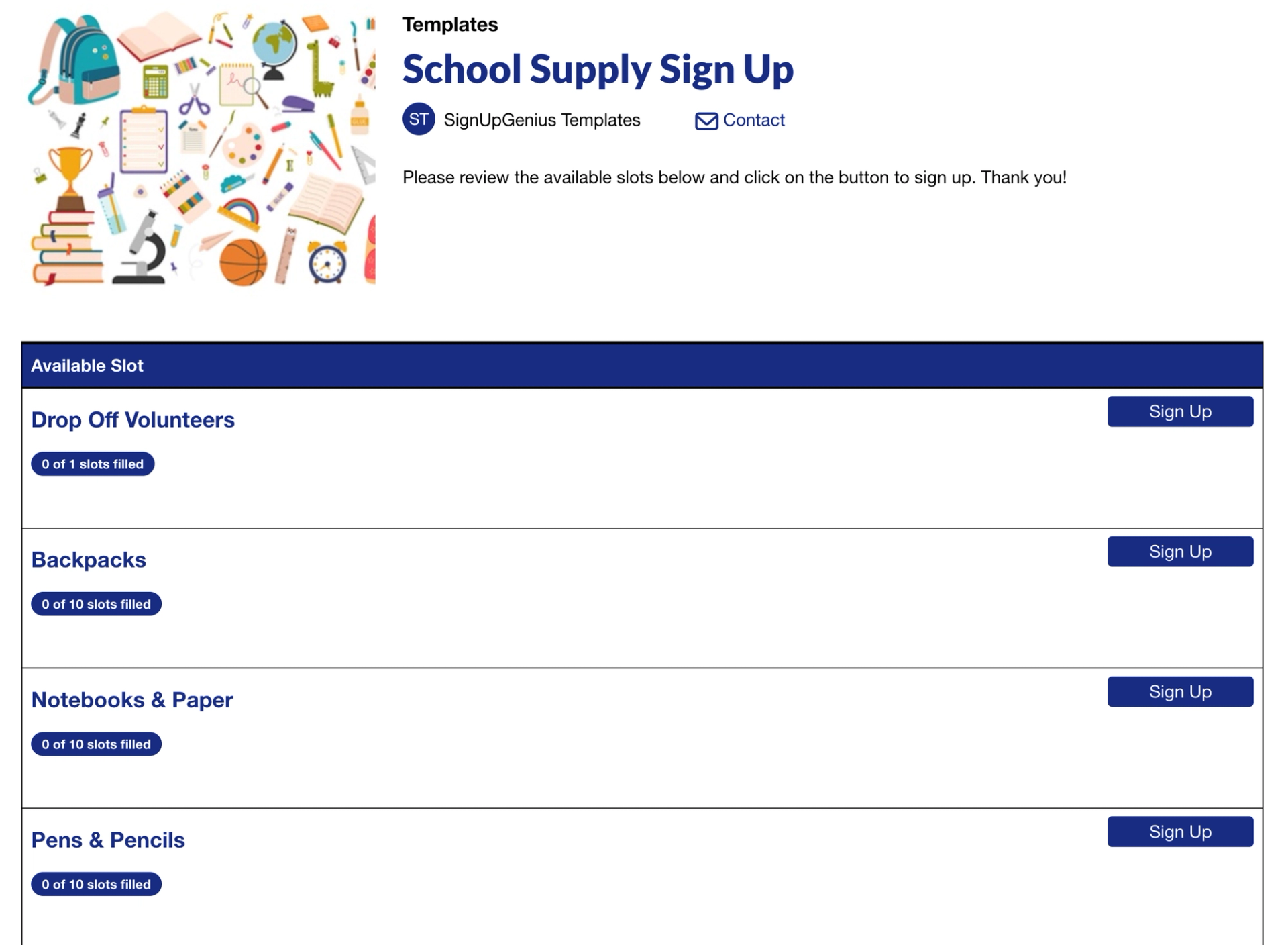
🧠 Genius Tip: Wishlist sign ups work great for these types of projects. Use our School Supplies Sign Up Template to quickly create your sign up and get it out to your group.

School Supply Wish List Template

signupsWrap CTA images
Create Sign Up

Connect with the Community

  1. Host a children's book drive. Collect new or gently used books for donation to a local shelter, community center, or Title I school. Offer classroom prizes for participation.
  2. Partner with your local library or bookstore. Many will co-sponsor events, offer story times, or donate book prizes or coupons for your celebration. These partnerships benefit everyone.
  3. Install a Little Free Library. If your school doesn't have one, Read Across America week is the perfect time to launch one. Stock it with the NEA's recommended titles and invite the community to contribute.
  4. Pitch a story to local media. A guest reader visit, a read-a-thon, or a particularly creative event can make for a great local news story. Reach out a week in advance to meet editorial deadlines.
  5. Make reading a year-round habit. Read Across America Day is a launch pad, not a finish line. Set up a reading log challenge, a classroom book club, or a monthly "author of the month" spotlight to keep the momentum going long after March 2.

💡 There are several tools from SignUpGenius that help schools organize volunteers and events, so educators can focus on what matters most.

See How SignUpGenius Helps Organize School Events

Ready to Get Started?

The best Read Across America events run on enthusiastic volunteers, and the best volunteers show up when sign-up is simple. Whether you're coordinating guest readers across 20 classrooms or organizing book drive donations from 300 families, an online sign up makes the logistics disappear so you can focus on the reading.

Read Across America Day falls on March 2 each year. For the latest book recommendations and educator resources, visit nea.org/readacross.

Recent Resource Articles

I am a huge fan of SignUpGenius. I am a second career nurse in northern Virginia at a large teaching hospital where I work on the labor unit with 120 fabulous coworkers. The nurses have to sign up for eight hours of "call" each schedule of four weeks. After two months of getting the staff prepared mentally for online call, I'm pleased to say our maiden voyage was a huge success. All 84 nurses signed up within 24 hours, which was unheard of. We usually have to stalk and threaten. Thanks SignUpGenius. I'm a fan forever.

Max Engler