Election volunteer programs look different depending on who's running them and what they need. Understanding the roles involved is the first step to building a sign-up structure that actually works.
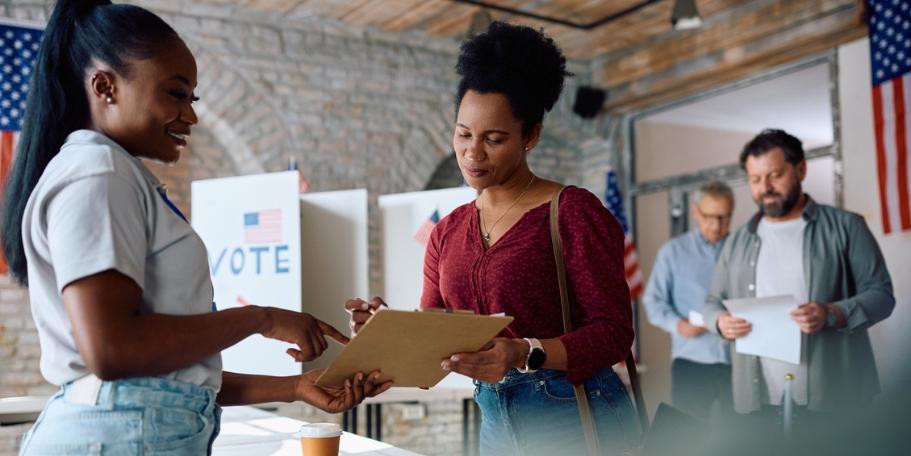
Poll workers and election judges are the most visible type of election volunteer. They staff polling locations on election day, check in voters, manage ballot materials, and help close the location at the end of the night. In many jurisdictions, these roles are called volunteer election judges and require a training session before the election. Shifts are long, often starting before 6 a.m. and running until after polls close, so clear slot definitions matter.
Ballot processing volunteers work at central counting locations before, during, or after election day depending on the state. These roles involve handling mail-in ballots, signature verification, or ballot scanning and require a different sign-up structure than polling location staffing.
Canvassing and get-out-the-vote volunteers are typically organized by political parties or nonpartisan civic organizations rather than election offices. They need sign-ups for phone banking shifts, door-knocking territory assignments, and event coverage.
Election protection volunteers monitor polling locations for accessibility issues, long lines, and procedural concerns. Nonpartisan organizations coordinating these volunteers need coverage across many locations simultaneously, making real-time slot tracking essential.
Setup and logistics volunteers help with equipment delivery, polling location setup, and supply distribution in the days before the election. These roles often get overlooked in the coordination process but are just as critical to a smooth election day.
One Sign Up for Every Election Role
Group your slots by role type or polling location within a single SignUpGenius sign up so every coordinator can see the full picture at a glance.
Recruitment is where most election volunteer programs feel the most pressure. Demand is high, the window is narrow, and the consequences of coming up short are very public.
The most effective recruitment starts with making the ask as specific and low-friction as possible. A general call for volunteers asking people to "contact the office to learn more" creates an extra step that many willing people never take. A direct link to a sign-up sheet with named roles, specific dates, and clear time commitments converts interest into confirmed participation much more reliably.
Where you share that link matters as much as the link itself. Successful election volunteer programs typically combine several channels: local government websites, county email lists, neighborhood apps like Nextdoor, civic organization networks, social media, and outreach through schools, libraries, and community centers. Many jurisdictions also partner with the League of Women Voters, nonpartisan civic groups, and local businesses that encourage employee civic participation.
For party-affiliated canvassing and GOTV programs, existing supporter lists and chapter networks are the fastest starting point. The sign-up itself should reflect the specific nature of those roles, with options for canvassing territories, phone banking time slots, and event coverage.
Genius Tip
Include the required training date in the slot description for poll worker and election judge roles. Volunteers who see the full commitment upfront are more likely to follow through than those who find out about training requirements later.
One often-overlooked recruitment strategy is re-engaging volunteers from previous elections. People who served as poll workers or canvassers before are the most reliable source of confirmed coverage. A personalized outreach message with a direct sign-up link that shows the roles they previously held is far more effective than a generic recruitment blast.
Scheduling Election Volunteer Shifts and Locations
Election day coordination is fundamentally a coverage problem. You have a fixed number of roles to fill across a fixed set of locations in a very specific time window. The structure of your sign-up directly determines how well you can track and manage that coverage.
The most practical approach for multi-location programs is to organize slots by polling location within a single sign-up. Each location gets its own group of slots, with role names, shift times, and the number of volunteers needed clearly defined. Slot limits prevent over-enrollment at popular locations while surfacing gaps at locations that need more attention.
For programs with a single location or a small number of sites, organizing by role type works well:
Election judges in one group
Check-in volunteers in another
Setup crew in a third.
The goal is giving every coordinator a clear picture of where coverage stands without having to cross-reference multiple spreadsheets.
Training sessions and pre-election activities should have their own slots in the sign-up, separate from election day assignments. This makes it easy to confirm training attendance and connect it to the corresponding election day role.
Volunteer Role
Typical Shift
Sign-Up Structure
Poll Worker / Election Judge
Full day (5 a.m. to close)
Grouped by polling location, slot limit per site
Ballot Processing Volunteer
Half-day shifts, multiple days
Grouped by date and shift window
Canvasser / Phone Banker
2-4 hour shifts
Grouped by date, territory, or shift time
Election Protection Volunteer
Half-day or full-day
Grouped by polling location with real-time coverage view
Setup / Logistics Volunteer
2-4 hours, day before election
Single group with role descriptions per slot
Reminders and Confirmation
The distance between a signed-up volunteer and a confirmed one is where election programs lose coverage. Someone who enthusiastically claimed a poll worker slot in September can easily forget about it by the time October arrives, especially if they haven't heard anything from the coordinator since.
Automatic reminders close that gap without requiring any additional effort from the coordinator. A reminder sent several days before the election and another the morning of the event gives volunteers two clear prompts to confirm their attendance or notify the coordinator if something has changed. That notification window is what makes last-minute coverage adjustments possible.
For high-stakes roles like poll workers and election judges, a direct confirmation request is worth including in the reminder message. Knowing the difference between "signed up and probably coming" and "signed up and confirmed" gives coordinators the information they need to make backup calls before election day rather than scrambling the morning of.
Keep reminder language warm and appreciative. Election volunteers are giving up a full day, often starting very early, and a message that acknowledges that commitment rather than just checking a box goes a long way toward building the kind of relationship that brings people back the next election cycle.
Day-of Coordination
Even well-organized programs hit unexpected gaps on election day. A volunteer calls out sick, a polling location opens short-staffed, or a last-minute role change creates a coverage problem that didn't exist the night before.
The best safeguard is a short standby list built into your sign-up. Volunteers who indicate they're available as backups can be contacted quickly when a gap opens, without requiring a public reshuffling of the entire sign-up.
Designate a single point of contact for each polling location or program area who is responsible for confirming volunteer arrivals in the first hour and flagging any gaps to the central coordinator. This structure keeps the information flowing in real time rather than surfacing problems too late to address.
For canvassing and GOTV programs, a central check-in point at the start of each shift makes it easy to confirm who is actually present, distribute materials, and make any last-minute territory adjustments before volunteers head out.
Built-In Waitlists and Real-Time Updates
SignUpGenius lets you add a waitlist to any sign-up slot so backup volunteers are ready to go if a confirmed participant cancels. Coordinators get notified instantly when something changes.
After the Election: Building for Next Time
The period right after an election is the best time to set the next one up for success. Volunteer energy is still high, institutional knowledge is fresh, and the gaps in your coverage are clearly visible.
Send a thank-you message to every volunteer within 48 hours of the election. Acknowledge the specific role they played and the hours they contributed. A personal, specific thank-you is far more memorable than a generic mass message and significantly increases the likelihood that someone returns for the next election cycle.
Document what worked and what didn't while the details are still clear. Which locations were hardest to staff? Which roles had the most no-shows? Which recruitment channels produced the most reliable volunteers? This information becomes the foundation of a better plan the next time around.
Keep your sign-up records accessible so you can reference past participants when recruitment opens again. Returning volunteers are your most valuable asset, and making it easy to reach them with a targeted, specific ask is the fastest path to confirmed coverage.
A volunteer election judge is a trained community member who staffs a polling location on election day. Duties typically include checking in voters, distributing ballots, managing the polling place, and closing the location at the end of the night. Most jurisdictions require election judges to complete a training session before the election.
How do I find election day volunteers?
The most effective channels are local government websites, civic organization networks, county email lists, and community platforms like Nextdoor. Many jurisdictions also partner with nonpartisan organizations like the League of Women Voters. A direct sign-up link with clearly defined roles and shift times converts interest into confirmed participation much more reliably than a general inquiry form.
How many poll workers does a polling location need?
Requirements vary by jurisdiction and location size. Most polling locations need between three and six election judges or poll workers to operate, with additional volunteers for setup, supply delivery, and closing duties. Check with your state or county election office for specific staffing requirements.
How do I reduce poll worker no-shows on election day?
Automatic reminders sent several days before the election and again the morning of significantly reduce no-shows. Adding a confirmation request to your reminder messages gives you an accurate picture of actual attendance before election day rather than discovering gaps when polling locations open.
Can I use one sign-up for multiple polling locations?
Yes. Organizing slots by location within a single sign-up lets you track coverage across all your sites from one dashboard. Slot limits ensure each location gets the right number of volunteers without over-enrollment at some sites and gaps at others.
How early should I start recruiting election volunteers?
For general elections, beginning recruitment six to eight weeks out gives you enough time to handle training requirements, address gaps, and build a standby list. Primary elections and special elections with shorter timelines may require starting recruitment as soon as the election date is confirmed.
Civic Volunteer Coordination
An overview of volunteer coordination across civic and government programs, from parks and rec to advisory boards and public hearings.
 Posted by Kate White