Scout Meeting Ideas for Every Troop and Every Program
 Posted by Trey Mosier
 Posted by Trey Mosier
Quick Start — Jump to your section
What Makes a Good Scout Meeting Cub Scout Meeting Ideas Boy Scout Meeting Ideas Girl Scout Meeting Ideas Last-Minute Ideas for Any Troop Organizing Your MeetingsA good scout meeting doesn't need to be elaborate. It needs a clear start, a purposeful activity, and a defined end. Scouts disengage when meetings feel shapeless, and leaders burn out when every session feels like it's being invented from scratch.
The simplest structure that works:
That rhythm gives scouts something to anticipate and gives you a repeatable container to drop ideas into.
The meeting ideas below are organized by program. Most can be adapted across programs with minor adjustments.
Cub Scout meetings work best when activities are hands-on, short, and easy to reset. Attention spans are shorter, groups are often larger, and the energy in the room can shift fast. Build in movement wherever you can.
Build and test challenges. Give each den a simple engineering task: build the tallest tower with index cards, design a bridge from popsicle sticks that holds a book, or construct a marble run from cardboard tubes. These hit STEM requirements and keep everyone occupied.
Citizenship service projects. Write cards for residents at a local senior center, collect canned goods for a food pantry, or make dog toys from old t-shirts for a nearby animal shelter. Short enough to complete in one meeting, meaningful enough to discuss in reflection.
Outdoor skills stations. Set up three or four stations around the room or meeting area: tying a basic knot, reading a compass, identifying local trees from picture cards, and packing a daypack correctly. Rotate dens every eight minutes.
Nature scavenger hunt. Works indoors or out. Give scouts a list of things to find, draw, or photograph depending on your setting. Pair older and younger scouts to build teamwork across age groups.
Pack meeting games. Large-group games like Scout says (a scouting-themed version of Simon Says), relay races with gear, or team trivia about scouting history keep pack meetings from dragging when you have 40 kids in a room.
Cooking badge night. Simple no-heat recipes work well: trail mix assembly, fruit kabobs, sandwich roll-ups. Assign each family a specific ingredient to bring so nothing overlaps and nothing gets forgotten.
Pinewood derby prep night. Even if the derby is weeks away, a dedicated car-design session keeps scouts engaged and gives parents a structured reason to participate.
Community helper visits. Invite a firefighter, librarian, nurse, or local business owner to speak for 15 minutes and answer questions. Low prep, high engagement, and often badge-eligible.

Genius Tip
For cooking nights and supply-heavy meetings, create a sign up so families can claim specific ingredients or materials in advance. Slot limits prevent duplicates and automatic reminders mean you're not sending follow-up texts the night before.
Boy Scout and Scouts BSA meetings can handle more complexity. Scouts in this program are working toward ranks and merit badges with real skill requirements, so the best meeting ideas connect directly to advancement without feeling like homework.
Merit badge workshops. Pick one merit badge and structure the entire meeting around its requirements. Citizenship, first aid, cooking, and personal fitness all have components that translate well to a single-meeting session. Invite a counselor or parent with relevant expertise to lead.
Patrol cooking competition. Assign each patrol a basic recipe and the same set of ingredients. Judge on taste, presentation, and cleanup. Covers cooking requirements and builds patrol identity at the same time.
Wilderness first aid scenarios. Set up two or three simulated scenarios: a sprained ankle on the trail, a scout with signs of dehydration, a cut that needs wound care. Rotate patrols through each station. High engagement, directly badge-relevant.
Map and compass course. Set up a simple orienteering course in a park, schoolyard, or large indoor space using printed maps and compass bearings. Works as both a skill builder and a competitive patrol challenge.
Eagle project brainstorm night. Older scouts who are approaching Eagle rank benefit from a structured brainstorm session. Invite recently earned Eagles to share their projects and answer questions. Younger scouts absorb more than you'd expect.
Gear maintenance and inspection. A practical meeting that often gets skipped: check and repair tents, clean and organize patrol boxes, inspect first aid kits, replace expired supplies. Scouts learn gear stewardship and the troop benefits directly.
Leave No Trace practice hike. A short local hike framed entirely around LNT principles. Assign each patrol a specific principle to teach the group at a stopping point along the route.
Service project planning session. Rather than just doing service, spend a meeting having scouts research, propose, and vote on the next service project. Builds leadership and investment in the outcome.
Girl Scout meetings span a wide age range from Daisies through Ambassadors, so the right activity depends heavily on your troop's level. The ideas below work across multiple levels with straightforward adjustments to complexity.
Business pitch night. Especially strong for Cadettes and above. Scouts identify a problem in their school or community and pitch a solution to the group. Connects to the Entrepreneurship and Business badges and builds public speaking confidence.
Cookie booth prep and practice. Before cookie season, run a mock booth in your meeting space. Practice pitching, handling money, making change, and working as a team. Reduces first-day nerves and covers financial literacy requirements.
📅 Make Cookie Booth Scheduling Easy
Set up shifts, assign roles like greeter and cashier, and send automatic reminders to every volunteer. No group texts, no last-minute scrambles.
See how to set up your booth sign upSTEM challenge rotation. Set up four stations with different challenges: build a water filtration system from household materials, code a simple pattern on a tablet, test which bridge design holds the most weight, create a basic circuit with a battery and LED. Rotate in 10-minute intervals.
Environmental action project. Pick a local issue: litter in a park, pollinator habitat loss, water conservation at school. Spend one meeting researching and one meeting acting. Strong badge alignment for Juniors through Ambassadors.
Self-defense and personal safety basics. Partner with a local instructor for a one-meeting introduction. Covers personal safety awareness, boundary-setting language, and basic physical techniques appropriate for the age group.
Cultural cooking night. Each scout or family brings a dish or ingredient from a culture they want to share. Short presentations, tasting, and a brief discussion about where the dish comes from. Badge-eligible and genuinely fun.
Photography or journalism workshop. Scouts document a troop event, write captions, and compile a short newsletter or photo story. Strong for older troops working on media-related badges.
Senior and Ambassador leadership projects. Older scouts benefit from meetings where they design and lead the activity for younger troops. Running a Daisy or Brownie meeting builds leadership hours and gives younger scouts a positive model.
Some meetings don't come together until the day of. That's fine. These ideas require minimal supplies and no advance preparation.
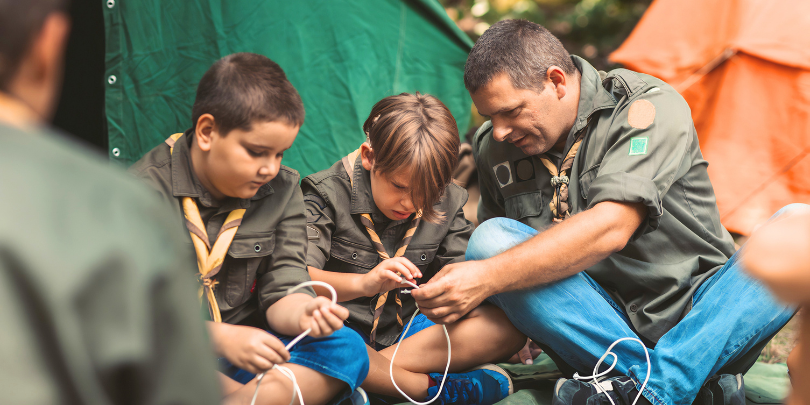
Knot-tying relay. Teach three basic knots at the start of the meeting, then run a relay where scouts race to tie them correctly. No supplies beyond rope.
Scouting trivia. Write 20 questions about scouting history, outdoor skills, and general knowledge. Split into teams. Takes 10 minutes to prep and fills 30 minutes easily.
Blindfolded obstacle course. Set up a simple course with chairs and cones. One scout navigates blindfolded while a partner gives verbal directions only. Builds communication skills and always generates energy.
Community map activity. Give each scout a blank map of the neighborhood around your meeting space. Have them mark locations they think matter: parks, food access, transit stops, community resources. Leads to a good discussion about place and community connection.
Skill card challenge. Print or write a set of cards, each with a scouting skill written on it. Scouts draw a card and have three minutes to teach that skill to the group. Works for any age and any skill level.
Newspaper tower competition. Each patrol gets the same number of newspaper sheets and a small amount of tape. Tallest freestanding tower wins. Five minutes to build, five minutes to judge, 20 minutes of engagement.
Tell your scouting story. Open the floor for scouts to share a memory from a previous campout, service project, or meeting. Quiet troops surprise you. Works especially well at the start of a new scouting year or after a long break.
Coming up with ideas is only half the job. The other half is making sure the right people show up with the right things. Snack assignments get forgotten. Volunteer drivers confirm and then go silent. Supply pickups fall through at the last minute.
A sign up handles the coordination layer so you're not chasing it down yourself. Create one for each meeting that has moving parts: assign snack duty by date, collect volunteer slots for badge night helpers, set up carpool sign ups for field trips. Families see what's available, claim what works for them, and get automatic reminders before the meeting. You see who's covered and who isn't in real time.
It's the same structure whether you're running a Cub Scout pack meeting for 50 kids or a Girl Scout troop of eight.
How often should a scout troop meet?
Most troops meet once or twice a month, though pack meeting frequency varies by program and charter organization. Cub Scout dens often meet separately in addition to full pack meetings. Consistency matters more than frequency — scouts and families plan around predictable schedules.
How long should a scout meeting be?
Most troop and den meetings run 60 to 90 minutes. Pack meetings with larger groups often run closer to 90 minutes to account for program segments, recognitions, and activities. Shorter is better for younger scouts.
What do you do when scouts aren't engaged?
Switch formats. If your meeting has been sitting still, add movement. If it's been loud and competitive, shift to something that requires quiet focus. Having a backup activity ready is one of the most practical habits a troop leader can build.
How do I get parents more involved in meetings?
Give them specific roles rather than an open invitation. Parents respond to "can you lead the knot-tying station on the 14th" far better than "we'd love help if you're available." A sign up with defined slots and clear expectations makes it easy for parents to say yes.
Can these meeting ideas count toward badge requirements?
Many of them can, depending on your program's current badge requirements. Always cross-reference activities against the official badge criteria for your specific program before presenting them as badge work to scouts or parents.
What supplies should I keep on hand for any meeting?
Rope, index cards, tape, paper, pencils, and a set of activity instructions you can pull from quickly. A small supply kit means last-minute meetings don't require a store run. Most of the activities in the last-minute section above need nothing beyond what's in that kit.
Scout Fundraising Ideas for Troops and Packs
Low-effort, event-based, and online fundraising ideas for Cub Scout packs, Boy Scout troops, and Eagle Scout projects.
Read moreHow to Coordinate Scout Troop Volunteers
Stop managing volunteers through group texts. Here is how to set up sign ups for booth shifts, badge nights, chaperones, and snack duty.
Read moreI feel compelled to let you know how SignUpGenius has literally changed my life — even I can't believe what I said, but it's true! I am involved with scheduling food as well as activities several times a year for church-related business and fun. The amount of time SignUpGenius has saved me is huge. It's very user friendly and intuitive. Thank you.
Carol Tisdale