100 True or False Questions for Any Occasion
 Posted by Ally Patterson
Jump to a Category
Animals Science Human Body Geography Food & Drink Sports History Holidays MiscellaneousPosted by Ally PattersonJump to a Category
Animals Science Human Body Geography Food & Drink Sports History Holidays MiscellaneousGenius Tip
For larger groups, assign each team a category and give them 60 seconds to answer as many questions as possible. The team with the most correct answers at the end wins. A sign up sheet is a great way to track teams, assign scorekeepers, and sort out who's bringing snacks.
Get started freeTrue or false questions are the perfect equalizer. They require no special knowledge, no teams of experts, and no complicated rules, just curiosity, a little confidence, and the willingness to be spectacularly wrong in front of people you like.
Use this list for your next game night, as a classroom warm-up, or to break the ice at a team meeting. Divide into teams and race through a category, appoint one person as host and keep score, or go fully casual and just see who knows the most random things. However you play, these questions cover enough ground that everyone will get a few right, and everyone will get a few wrong.
Answer: False
Explanation: A group of flamingos is called a flamboyance.
Answer: False
Explanation: Elephants, hippos, rhinos, and sloths are all physically unable to jump. Elephants are simply the most famous example.
Answer: True
Explanation: Snails can enter a long dormancy period called estivation when weather conditions become too hot or dry.
Answer: True
Explanation: Two pump blood to the gills, and one pumps it to the rest of the body. All three stop beating when an octopus swims, which is why they prefer crawling.
Answer: True
Explanation: Sharks have a nictitating membrane, a protective inner eyelid that closes when they attack prey.
Answer: True
Explanation: Studies have shown that slow, calming music can increase milk production by a meaningful amount.
Answer: False
Explanation: Most penguin species are serially monogamous. They are faithful within a breeding season but not always to the same partner across years.
Answer: True
Explanation: Butterflies have taste sensors on their legs that help them identify plants when they land.
Answer: False
Explanation: This is a common myth. Goldfish can actually remember things for months.
Answer: True
Explanation: This behavior is called rafting. Sea otters also wrap themselves in kelp to keep from drifting.
Answer: True
Explanation: A crocodile’s tongue is attached to the roof of its mouth by a membrane and cannot be extended.
Answer: True
Explanation: Mantis shrimp have 16 types of color receptors, compared to the three that humans have.
Answer: False
Explanation: Lightning frequently strikes the same place multiple times. The Empire State Building is struck by lightning around 20 times per year.
Answer: True
Explanation: The Sun is a medium-sized star classified as a yellow dwarf, located about 93 million miles from Earth.
Answer: False
Explanation: Light travels at approximately 186,000 miles per second, while sound travels at about 767 miles per hour.
Answer: False
Explanation: Water boils at lower temperatures at higher altitudes because atmospheric pressure decreases. In Denver, Colorado, water boils at about 202°F.
Answer: True
Explanation: Even though the brain accounts for only about 2% of body weight, it consumes a large portion of the body’s energy.
Answer: False
Explanation: DNA stands for Deoxyribonucleic Acid.
Answer: True
Explanation: Venus rotates so slowly that it completes a full orbit around the Sun before it finishes one rotation on its axis.
Answer: False
Explanation: Venus and Uranus rotate in the opposite direction from most other planets.
Answer: True
Explanation: Humans share surprising amounts of DNA with many living things, including about 60% with fruit flies and roughly 85% with mice.
Answer: True
Explanation: This phenomenon is called the Mpemba effect. Scientists have observed it repeatedly, although the exact conditions that cause it are still debated.
Answer: True
Explanation: The stapes, or stirrup bone, located in the middle ear, is the smallest bone in the human body.
Answer: True
Explanation: If the nucleus of an atom were the size of a marble, the atom itself would be roughly the size of a football stadium.
Genius Tip
True or false questions are a great warm-up, but icebreakers keep the energy going. Use them at the start of a game night, team meeting, or classroom activity to get everyone talking before the real competition begins.
Browse icebreaker questionsAnswer: False
Explanation: Koalas also have fingerprints, and they are so similar to human fingerprints that they have occasionally confused crime scene investigators.
Answer: True
Explanation: The average adult body contains about 3 to 4 grams of iron, mostly in the blood.
Answer:True
Explanation:While most bones stop growing after adolescence, cartilage continues to grow slowly throughout life. Ears and noses are largely made of cartilage.
Answer: False
Explanation: The tongue is strong, but the masseter (jaw muscle) is generally considered the strongest muscle relative to its size.
Answer: False
Explanation: The brain continues to produce new neurons throughout life, particularly in the hippocampus, which is associated with memory and learning.
Answer: True
Explanation: Stomach acid is powerful enough to dissolve metal, so the stomach replaces its lining roughly every three to four days.
Answer: True
Explanation: Human vision is extremely sensitive in low-light conditions and can detect even very small amounts of light at great distances.
Answer: False
Explanation: Human blood is always red. Deoxygenated blood appears darker red, not blue. The blue look of veins through skin is caused by how light passes through tissue.
Answer: True
Explanation: Babies are born with around 300 bones. Many fuse together during childhood and adolescence, leaving adults with 206 bones.
Answer: True
Explanation: Simply reading or thinking about yawning can trigger one. (You might even be yawning right now.)
Answer: True
Explanation: Australia is the only nation in the world that occupies an entire continent.
Answer: True
Explanation: Canada contains more than 60% of the world's lakes, totaling over 2 million.
Answer: False
Explanation: Antarctica is the largest desert in the world. A desert is defined by low precipitation, not temperature. The Sahara is the largest hot desert.
Answer: True
Explanation: Russia borders 14 countries, more than any other nation on Earth.
Answer: False
Explanation: The Amazon River flows into the Atlantic Ocean on the northeastern coast of Brazil.
Answer: True
Explanation: The iron structure expands in warm temperatures, allowing the tower to grow up to about 6 inches taller during hot weather.
Answer: True
Explanation: Vatican City covers about 0.17 square miles and has a population of fewer than 1,000 people.
Answer: True
Explanation: New Zealand granted women the right to vote in 1893, nearly 30 years before the United States.
Answer: False
Explanation: This is a common myth. The wall is long but not wide enough to be seen from space without aid, according to multiple astronauts.
Answer: False
Explanation: Iceland has a relatively mild climate with large areas of vegetation, while Greenland is about 80% covered by an ice sheet.
Answer: True
Explanation: The greater Tokyo metropolitan area has around 37 million residents, which is close to the entire population of Canada.
Answer: True
Explanation: Archaeologists have found 3,000-year-old honey in Egyptian tombs that was still edible. Its low moisture content and acidic pH prevent bacteria from growing.
Answer: False
Explanation: Almonds are technically seeds. They are the edible pit of a drupe fruit, more closely related to peaches than to walnuts.
Answer: False
Explanation: Coffee is made from the roasted seeds of a coffee plant's fruit, commonly called coffee cherries. They are seeds, not true beans.
Answer: True
Explanation: Wild carrots were purple, yellow, and white. The familiar orange carrot was cultivated in the Netherlands during the 17th century.
Answer: True
Explanation: In 1893, the U.S. Supreme Court ruled in Nix v. Heddenthat tomatoes are legally vegetables for trade and tariff purposes, even though they are botanically fruits.
Answer: True
Explanation: Bananas contain potassium-40, a naturally occurring radioactive isotope. The amount is extremely small and harmless.
Answer: False
Explanation: White chocolate contains cocoa butter, sugar, and milk but no cocoa solids, which many purists consider necessary for true chocolate.
Answer: True
Explanation: Marcellus Edson of Montreal patented a peanut paste made from roasted peanuts in 1884.
Answer: False
Explanation: Saffron is the most expensive spice. It takes around 75,000 crocus flowers to produce one pound of saffron.
Answer: True
Explanation: Botanically, an avocado is a large berry with a single seed produced by a flowering plant.
Genius Tip
Once you've exhausted the true or false round, getting to know you questions are a natural next step — especially for new groups or teams who are just getting comfortable with each other.
See getting to know you questionsAnswer: False
Explanation: The ancient Olympic Games were held every four years. That interval, called an Olympiad, was also used as a unit of time in ancient Greece.
Answer: True
Explanation: The 10-foot height has been the standard since basketball was invented by James Naismith in 1891.
Answer: True
Explanation: Astronaut Alan Shepard hit two golf balls on the Moon during the Apollo 14 mission in 1971.
Answer: False
Explanation: French cyclists have rarely won in recent decades. Riders from countries like Spain, the United States, and Great Britain have dominated many modern races.
Answer: True
Explanation: The most common theory is that the term comes from the French word l'oeuf, meaning egg, which resembles the shape of zero.
Answer: True
Explanation: Brazil has won five World Cups, more than any other nation.
Answer: True
Explanation: The story comes from the legend of Pheidippides, who ran from Marathon to Athens to report a Greek victory. The modern distance was standardized at the 1908 London Olympics.
Answer: False
Explanation: A perfect game means every batter is retired without reaching base. Outs can occur through strikeouts, groundouts, or flyouts.
Answer: True
Explanation: Soccer’s global fanbase is estimated at roughly 4 billion people, making it the most popular sport in the world.
Answer: True
Explanation: The race regularly hosts around 50,000 runners, making it the largest marathon by number of participants.
Answer: False
Explanation: Napoleon was about 5 feet 6–7 inches tall, which was average or slightly above average for a French man in the late 1700s. The “short Napoleon” myth likely came from British propaganda and confusion between French and English measurement systems.
Answer: True
Explanation: The fire began in a bakery on Pudding Lane in 1666 and burned for four days, destroying large parts of the city.
Answer: False
Explanation: Einstein excelled in mathematics from a young age and had mastered calculus by the time he was a teenager.
Answer: True
Explanation: Neil Armstrong stepped onto the Moon on July 20, 1969, during the Apollo 11 mission.
Answer: True
Explanation: The Great Pyramid was completed around 2560 BC, Cleopatra lived around 30 BC, and the Moon landing occurred in 1969. Cleopatra is closer in time to the Moon landing.
Answer: False
Explanation: The Titanic carried lifeboats with space for about 1,178 people, but more than 2,200 people were on board.
Answer: True
Explanation: On June 26, 1974, a pack of Wrigley’s Juicy Fruit gum became the first product scanned using a barcode at a supermarket in Ohio.
Answer: True
Explanation: The Anglo-Zanzibar War in 1896 lasted roughly 38–45 minutes.
Answer: False
Explanation: The tower was built for the 1889 World’s Fair and was originally meant to be dismantled after 20 years, but it was preserved because it proved useful for radio transmissions.
Answer: True
Explanation: Abraham Lincoln stood 6 feet 4 inches tall, making him the tallest president in U.S. history.
Answer: True
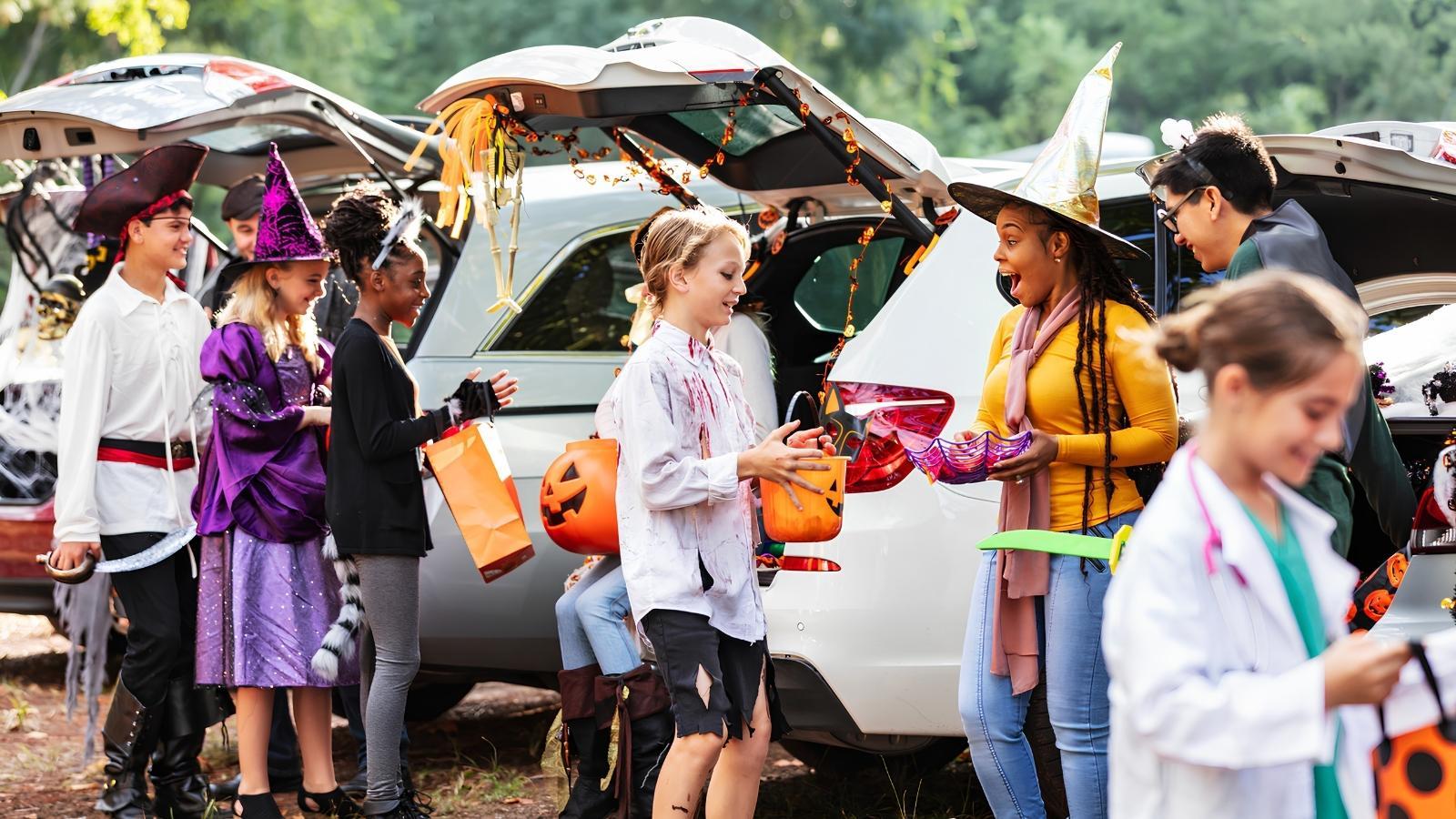
Explanation: Decorating evergreen trees indoors during winter became popular in Germany in the 16th century and later spread throughout Europe and the United States.
Answer: True
Explanation: Halloween traces back to the Celtic festival of Samhain, which marked the end of the harvest season and the beginning of winter.
Answer: True
Explanation: German immigrants brought a similar Candlemas tradition to Pennsylvania, originally using a hedgehog to predict the weather.
Answer: False
Explanation: The origin of the English word “Easter” is debated. One theory connects it to Eostre, a Germanic spring deity, though historians disagree on the exact origin.
Answer: False
Explanation: The holiday began as a religious feast day. Its connection to romantic love grew during the Middle Ages, especially through literature like Geoffrey Chaucer’s poetry.
Answer: False
Explanation: Thanksgiving is celebrated on the fourth Thursday of November, which is not always the last Thursday of the month.
Answer: True
Explanation: Fireworks were developed in China around the 7th century during the Tang Dynasty, originally discovered while experimenting with early gunpowder.
Answer: False
Explanation: Many cultures celebrate the new year on different dates, including Lunar New Year, Nowruz, and Rosh Hashanah.
Answer: False
Explanation: Stories about the candy cane representing a shepherd’s crook or the letter J are popular but unsupported by historical evidence. The shape was likely created so the candy could hang on Christmas trees.
Answer: True
Explanation: The term dates back to medieval English folklore and has been used since at least the 15th century.
Answer: True
Explanation: Telephone engineers coined the term “octothorpe” in the 1960s when the symbol was added to push-button phones.
Answer: False
Explanation: Several letters do not appear in state names, including B, J, Q, X, and Z.
Answer: True
Explanation: Another lesser-known term is a “glaring,” especially when the cats appear unfriendly.
Answer: True
Explanation: Before the fruit reached Europe, the color was often described as “yellow-red.” The English word “orange” comes from the Sanskrit word naranga.
Answer: False
Explanation: Fortune cookies were invented in the United States, most likely in California in the early 20th century.
Answer: True
Explanation: With a large enough sheet of paper, people have successfully folded paper more than 12 times.
Answer: True
Explanation: The dot is called a tittle, a term used in typography and linguistics.
Answer: True
Explanation: Wayne Allwine, who voiced Mickey Mouse, married Russi Taylor, the voice of Minnie Mouse, in 1991.
Answer: False
Explanation: A full Earth rotation is about 23 hours, 56 minutes, and 4 seconds. The 24-hour day is a rounded solar time used for everyday timekeeping.
Answer: True
Explanation: It is the only common English word that ends with the letters “mt.”
Answer: True
Explanation: Many historians believe Leonardo da Vinci intentionally painted her without eyebrows, though some may also have faded during centuries of restoration.
Answer: True
Explanation: In physics, a jiffy is the time it takes light to travel one centimeter, about 33.4 picoseconds.
Answer: True
Explanation: Walter Frederick Morrison, inventor of the modern flying disc, had his ashes mixed into commemorative frisbees after he died in 2010.
Answer: True
Explanation: The word comes from the Czech robota, meaning forced labor, and was popularized by playwright Karel Čapek in his 1920 play R.U.R.
Answer: True
Explanation: Swiss animal welfare laws recognize guinea pigs as social animals, so keeping only one is considered neglect.
Just a note to say how much I love SignUpGenius. I'm coaching a team from Team-in-Training that is fundraising and training to ride 100 miles around Lake Tahoe to benefit The Leukemia & Lymphoma Society. We have weekly training rides that need volunteer support and a need to get RSVPs from the cyclists so I know who will show up at team rides. Using SignUpGenius, I have ride support volunteers for almost all our rides through early May. This has been like pulling teeth in the past. It was so simple to set up and send out and easy for the volunteers to sign up.
Art Saffran